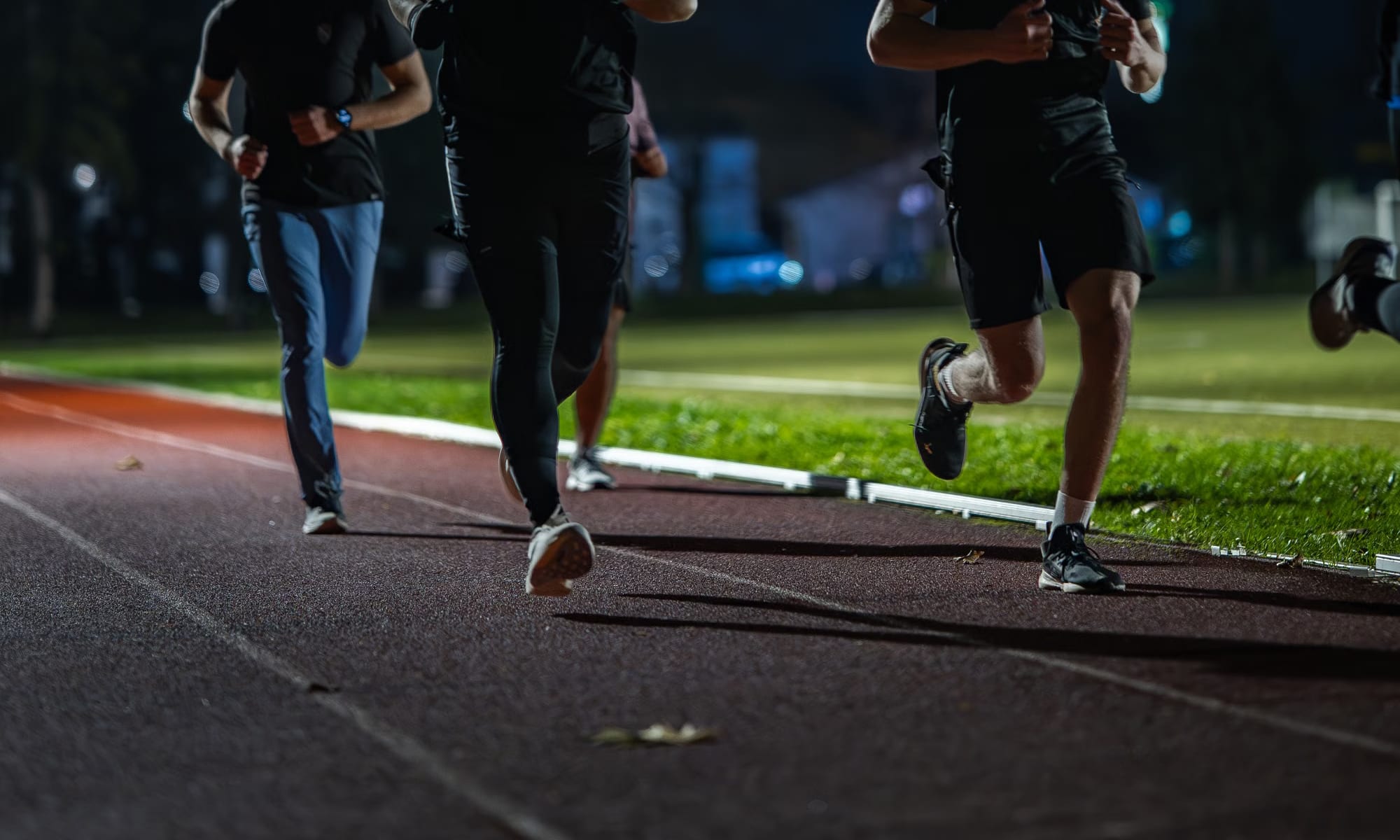
An athlete running under floodlights during an evening training session

Athlete telemetry & performance analytics

Measure what the training week actually did to your athletes.

TechSport Ash builds body-worn sensor pods and the analytics platform behind them, for performance directors, strength and conditioning staff and club analysts who need numbers they can defend in a selection meeting.

1000HzMaximum IMU sample rate
10HzDual-band GNSS position fix
12gSensor pod mass
1000 Hz inertial capture Dual-band GNSS UWB indoor positioning RMSSD readiness Markerless pose capture FIT & CSV export

The platform

Six modules, one measurement chain

Hardware and software are sold and supported as one system, because a sensor specification means very little without the pipeline that turns its output into something a coach can act on. Each module below stands alone and shares the same athlete index, the same time base and the same export formats.

Wearable Telemetry Units in use with a professional squad
01 · Hardware

Wearable Telemetry Units

A 12 g pod between the scapulae. Accelerometer, gyroscope and magnetometer fused at up to 1000 Hz, dual-band GNSS outdoors, ultra-wideband positioning indoors, and enough on-board storage for a full training week without a dock.
Read more about Wearable Telemetry Units
02 · Software

Team Analytics Suite

The browser workspace your staff actually live in: squad load boards, individual timelines, session planning and the audit trail that shows which algorithm version produced every figure on screen.

Read more about Team Analytics Suite
03 · Modelling

Training Load & Readiness

External and internal load on one axis, with RMSSD-based readiness and uncertainty made visible rather than rounded away.

Read more about Training Load & Readiness
05 · Risk

Injury Risk Modelling

Time-to-event models over exposure history that describe a changing risk profile with confidence intervals, rather than issuing a red light nobody can interrogate.

Read more about Injury Risk Modelling
Live Broadcast Data Feeds in use with a professional squad
06 · Broadcast

Live Broadcast Data Feeds

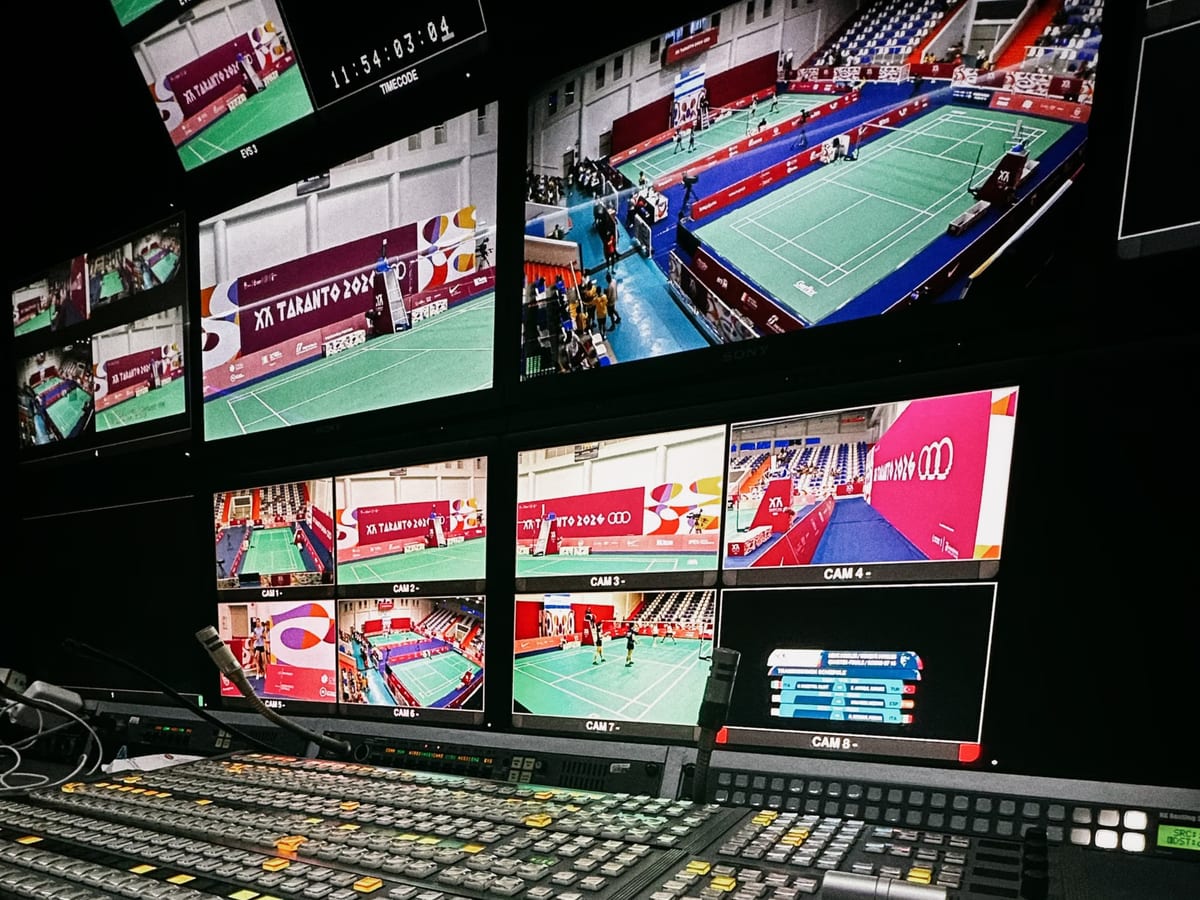
Rights-controlled live telemetry out to graphics engines and second-screen products, with per-field consent enforced at the feed, not in a policy document.

Read more about Live Broadcast Data Feeds

How it works

The measurement chain

Every figure on a TechSport Ash dashboard travels the same five steps. Knowing the chain matters, because most of the disagreements between sports-technology vendors are really disagreements about what happened at step three.

01 · Sensor

Capture

A 12 g pod between the scapulae samples accelerometer, gyroscope and magnetometer, adds GNSS or UWB position and pairs to a chest or arm heart-rate source over Bluetooth Low Energy.

02 · Sync

Transfer

Pods dock in a 20-bay charging case that pushes the session over the venue network. A full training week of 250 Hz data offloads in under four minutes per pod.

03 · Model

Process

Server-side pipelines run sensor fusion, gait segmentation, load derivation and readiness modelling, versioned so that a metric computed in March can be recomputed identically in November.

04 · Dashboard

Review

Squad and individual views land in the browser workspace with the uncertainty ranges attached. Every number is traceable back to the session and the algorithm version that produced it.

05 · Decision

Act

Staff adjust the session plan, the rehabilitation progression or the selection conversation. The system records what was decided so the next review has context, not just numbers.

Hardware

TSA‑P4 sensor pod specification

The pod that most of our clients deploy across a senior squad. Figures below are product specifications measured under our own bench and field test conditions; battery life in particular varies with sample rate and positioning mode.

TSA‑P4 — body-worn telemetry pod
ParameterSpecificationNotes
Dimensions81 × 43 × 11 mmFits a standard scapular harness pocket; rounded shell, no exposed edges
Mass12 gExcluding harness; 46 g with the medium vest
Inertial sampling100 / 250 / 500 / 1000 HzTri-axial accelerometer ±32 g, gyroscope ±4000 °/s, magnetometer ±16 gauss
Positioning10 Hz GNSS · 20 Hz UWBL1 + L5 dual-band, four constellations; ultra-wideband indoors via fixed anchors
Heart rateBluetooth Low EnergyPairs with standard chest straps and optical arm bands; RR intervals recorded, not just averages
Battery8 h at 250 Hz4.5 h at 1000 Hz with GNSS active; full charge in 90 minutes in the dock
On-board storage32 GBApproximately one training week at 250 Hz before offload is required
Ingress protectionIP67Dust-tight; immersion to 1 m for 30 minutes. Not rated for pressure washing
Operating range−10 °C to +50 °CThermal throttling above 45 °C reduces the maximum sample rate
Sync method20-bay dock, Ethernet or Wi-FiApproximately four minutes per pod for a full week of 250 Hz data
Export formatsCSV, FIT, JSON, raw binaryDocumented schemas; raw stream schema published and version-pinned

Harness sizes XS–XXL. Anchors for indoor positioning are specified per venue after a site survey; a standard basketball or handball hall typically needs six.

In practice

What teams use it for

Three of the questions clients bring us most often. None of them are solved by a dashboard alone — but all three get materially easier when the underlying measurements are consistent, individual and traceable.

In-season Sensor pods and charging dock laid out beside a training kit bag before a session

Managing load across a congested fixture list

When you play twice a week for two months, the question is never "how hard was that session" in isolation — it is what this week does to a rolling four-week exposure that already includes travel, two matches and a return-to-play progression. Our load module keeps external load (distance in speed bands, accelerations, decelerations, mechanical work) and internal load (heart-rate-derived and session-RPE) on one timeline per athlete, then shows the planned week against it before you run it.

  • Speed-band distance with club-configurable thresholds, not vendor defaults
  • Session-RPE captured on the athlete app and reconciled with sensor output
  • Planned-versus-actual view so a session plan can be corrected before Tuesday, not reviewed after Friday
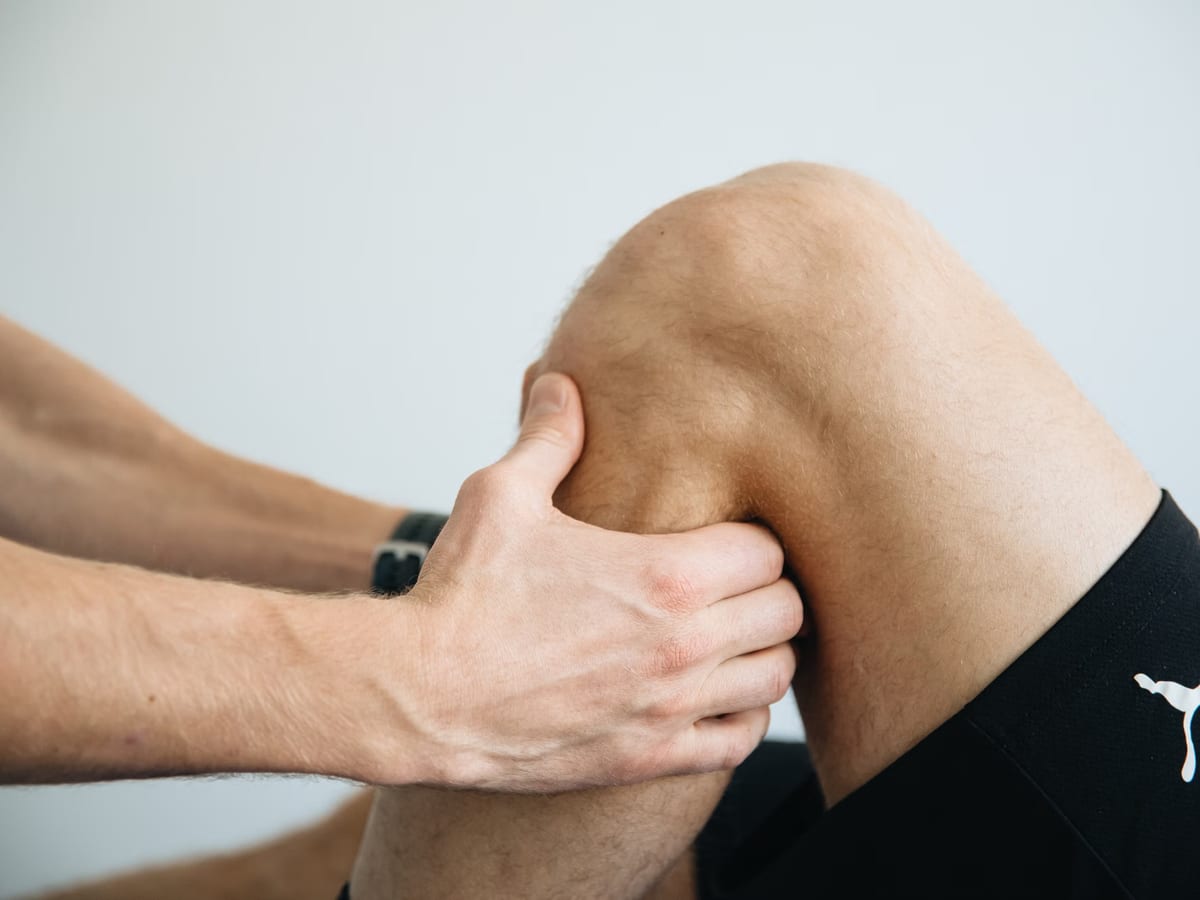
Return to play A physiotherapist guiding an athlete through a controlled rehabilitation progression

Evidence for the return-to-play conversation

Rehabilitation decisions get made under pressure, often with a fixture in mind. What helps is not a score out of ten but a defensible comparison: how this athlete's mechanical output, asymmetry indices and heart-rate response now compare to their own pre-injury baseline, and how far the progression still has to run. We build the comparison against the individual, because between-athlete norms rarely survive contact with a real squad.

  • Individual pre-injury baselines held per movement pattern, not per squad average
  • Left-right asymmetry from IMU-derived ground contact and flight time, with confidence intervals
  • Progression tracking that shows the trajectory as well as today’s value
Recruitment An analyst comparing squad performance data across two screens in a club office

Comparing players you did not measure yourself

Talent identification runs on inconsistent data: different vendors, different thresholds, different pitch sizes, different competition levels. The analytics suite normalises what can honestly be normalised — speed bands recalculated to your definitions, per-minute rates rather than totals, position-adjusted comparisons — and is explicit about what cannot. A recruitment shortlist built on incomparable numbers is worse than no numbers at all.

  • Threshold recalculation so imported sessions use your speed bands, not the source club’s
  • Per-minute and per-possession normalisation for unequal exposure
  • A provenance flag on every imported metric showing which system produced it

Integrations

It has to fit what you already run

No club replaces its whole stack for a telemetry vendor, and no club should. These are the categories of system we connect to. We deliberately do not display third-party logos here — ask us about a specific product and we will tell you plainly whether the integration exists today.

Athlete management systems

Bi-directional sync of squads, availability status and session summaries with the AMS you already run, over REST or scheduled export.

GPS and LPS providers

Import third-party positional sessions so historical distance and speed data sits alongside ours in one comparable timeline.

Force plates

Ingest countermovement jump and isometric test outputs, aligned to the same athlete and date index as field load.

EMR and medical records

Scoped one-way export of availability and load context into clinical systems, with medical fields never travelling the other way.

Video platforms

Timecode alignment so a flagged high-intensity effort links straight to the clip in your existing video review tool.

CSV and FIT export

Session and raw-stream export in open formats, scheduled or on demand, with a documented column schema that does not change without notice.

REST API

A documented, versioned JSON API with OAuth 2.0 client credentials, cursor pagination and per-endpoint rate limits.

Webhooks

Signed HTTPS callbacks when a session finishes processing, a threshold is crossed or an athlete record changes, with replay for missed deliveries.

Research notes

What we are reading and arguing about

Short, technical write-ups from our applied-science team. We publish the caveats as well as the methods, including where our own outputs are weaker than the interface makes them look.

All research notes

A voice from the field

The thing that changed our meetings was not a new metric. It was being able to say, out loud, how confident we were in the number — and having the system show the same range on the screen instead of a single tidy figure nobody believed.
Performance directorProfessional rugby club

Questions

Frequently asked

The questions performance and medical staff put to us before a first deployment, answered without the marketing layer.

What sample rate do the sensor pods actually record at?

The inertial measurement unit logs at a configurable 100, 250, 500 or 1000 Hz. Most field-sport sessions run at 250 Hz, which resolves foot-strike and change-of-direction events cleanly while keeping a full training week inside on-pod storage. The 1000 Hz mode exists for gait and jump-landing work where you need the acceleration peak itself rather than a smoothed envelope, and it is the mode we recommend for any analysis that will end up in a rehabilitation decision.

How does positioning work indoors?

Outdoors the pod uses dual-frequency GNSS (L1 and L5, with GPS, Galileo, GLONASS and BeiDou constellations) at 10 Hz. Indoors the same pod switches to an ultra-wideband local positioning system using anchors mounted around the hall. The transition is automatic and the exported track carries a per-sample field recording which source produced it, so you never silently mix positioning regimes inside one distance total.

Can we get our data out of your system?

Yes, and we regard that as a requirement rather than a favour. Every session exports as CSV at raw or summarised resolution, as FIT for tooling that expects the ANT+ ecosystem, and as JSON through the REST API. Raw IMU streams export as compressed binary with an open, documented schema. There is no contractual lock on the data your athletes generate; if you leave, you take the archive with you.

Do you replace our athlete management system?

No. We assume you already have one and that it is the system of record for availability, medical notes and scheduling. TechSport Ash writes session summaries, load metrics and readiness scores into it over a REST integration or scheduled export, and reads squad and calendar data back. Replacing an AMS mid-season is a bad idea, and a telemetry vendor is a poor candidate to try.

How do you handle athlete health data?

Health-adjacent data is stored encrypted at rest with AES-256 and in transit with TLS 1.3, in the regional cloud tenancy you select at contract signing. Access is role-scoped: a strength coach and a physiotherapist do not see the same fields by default. We support GDPR subject-access, rectification, portability and erasure requests, we sign business associate agreements where a client's context makes HIPAA relevant, and we keep an exportable audit log of every read of an individual athlete's record.

What does a deployment actually involve?

A typical first deployment is four to six weeks. Week one is scoping: squad size, indoor and outdoor venues, existing systems, and who signs off on data governance. Weeks two and three cover hardware fitting, harness sizing and anchor installation if you need indoor positioning. Week four runs parallel with your current provider so you can compare outputs on identical sessions. Handover includes staff training and a written data-governance pack for your athletes.

Will the model tell us who is going to get injured?

It will not, and we will not claim otherwise. Injury is multi-causal and the base rates involved make individual-level prediction statistically weak — a point the sports-science literature has made repeatedly about single-metric approaches including the acute:chronic workload ratio. What our injury-risk module does is surface changes in an athlete's own exposure and response profile, with uncertainty attached, so that a clinician has a better-informed conversation. The decision stays with your staff.

Bring your own session data. We will show you what we would do with it.

A demo runs about 45 minutes. Send us one anonymised session file beforehand and we will process it live rather than showing you a canned dataset.