
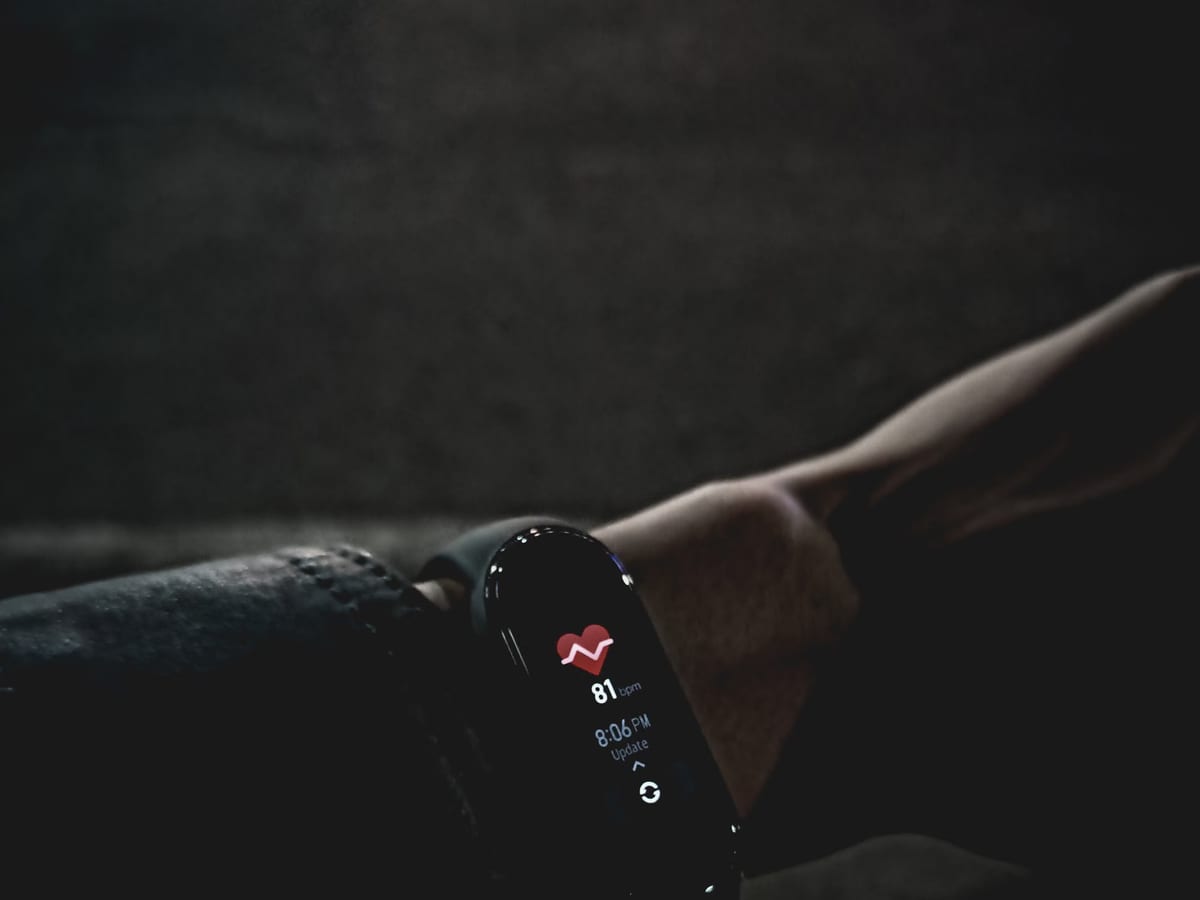
Wearable Telemetry Units
Body-worn sensor pods with 1000 Hz inertial capture, dual-band GNSS and an indoor local positioning fallback.
Module detail — Wearable Telemetry UnitsModule 06 · Broadcast Data Feeds
Rights-controlled live telemetry out to graphics engines and second-screen products, with per-field athlete consent enforced at the feed itself.
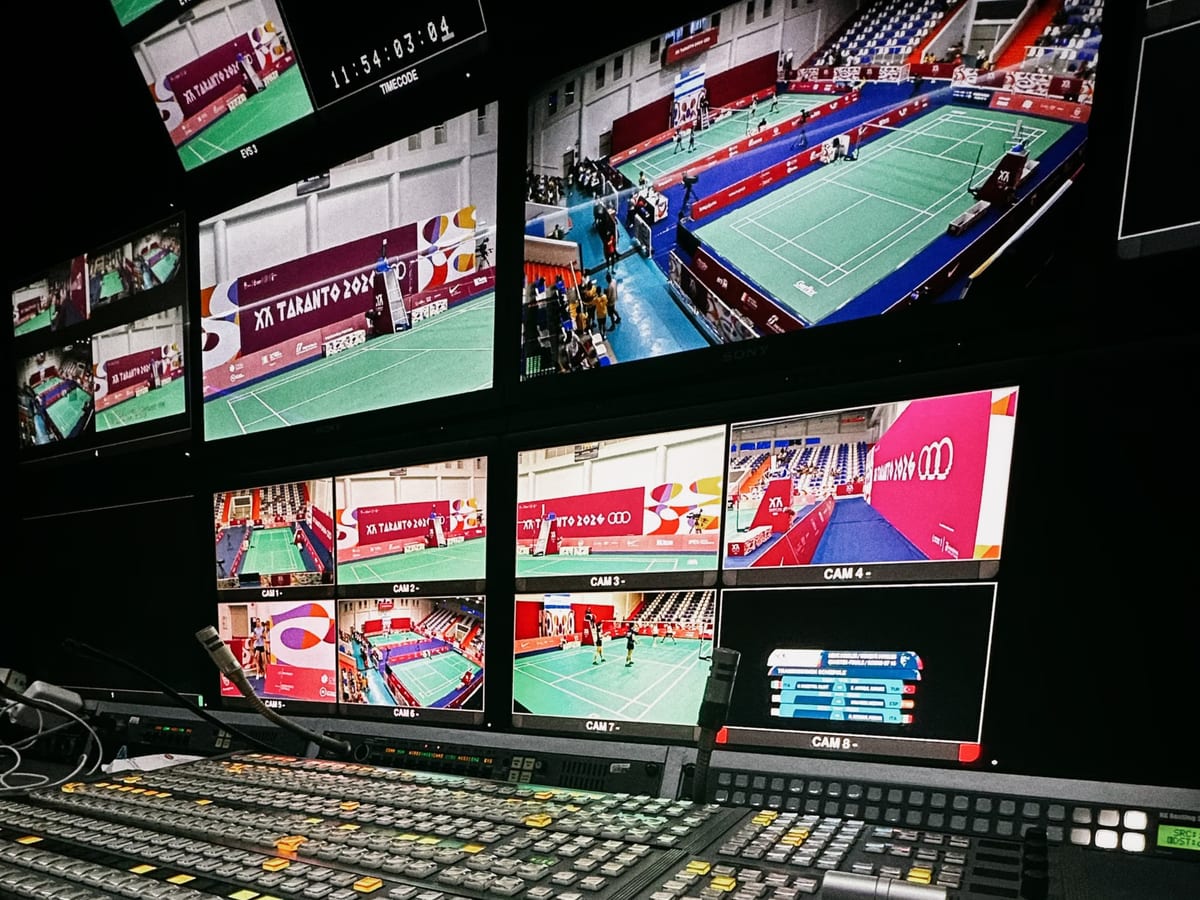
Everything else on this platform is allowed to be slow and careful. Broadcast is neither. A speed readout that appears four seconds after the sprint is worthless, and a feed that drops during the second half is worse than no feed at all. This module exists because those constraints are genuinely different from analytical processing, and pretending otherwise produces a product that is bad at both.
The live path runs separately from the analytical pipeline. Pods stream a reduced telemetry set over the venue network to an on-site edge appliance, which performs the minimum viable processing — smoothing, unit conversion, event detection for a small set of triggers — and publishes. Typical glass-to-graphics latency is under 800 milliseconds. The full-fidelity session still uploads afterwards for the analytical pipeline; the two never contradict each other because the live values are explicitly labelled provisional.
Note the last one. Heart rate is health-adjacent data, and broadcasting it is a materially different act from recording it for the medical department. Our consent model is per-field and per-athlete, held in the platform, and enforced at the feed publisher rather than in a downstream policy document. If an athlete withdraws consent for heart rate at 14:50, the 15:00 kick-off feed does not carry it. There is no override switch for a producer.
Two transports. A WebSocket JSON stream for graphics engines, second-screen applications and web products, with a documented message schema, sequence numbers and a replay buffer covering the last sixty seconds so a reconnecting client catches up rather than jumping. And SRT-wrapped ancillary data for broadcast chains that prefer to carry telemetry alongside video rather than out of band.
Where a league operates its own data specification, we map to it rather than asking the league to adopt ours. Field names, units, event vocabularies and timestamp conventions are all configured per competition, and the mapping is a versioned artefact so a mid-season schema change is a deliberate deployment rather than a surprise.
The edge appliance runs dual network paths, typically venue Ethernet plus a bonded cellular backup, with automatic failover. It buffers locally so a network interruption produces a brief gap rather than a lost half. Two appliances can run in active-standby for competitions where a feed outage carries a contractual penalty.
Positioning indoors uses the same ultra-wideband anchors as the analytical system, which means an arena installation serves both. Outdoors the live path uses the pod's GNSS solution directly; a stadium bowl with poor sky view is the single most common cause of degraded live speed data, and it is worth surveying before the first fixture rather than diagnosing at half time.
Athlete performance data has commercial value, and who holds the rights to exploit it is contractual rather than technical. We do not sell, license or aggregate your athletes' data for our own commercial purposes, and that is written into the agreement rather than left to a privacy policy. What we provide is the pipe and the controls; the rights negotiation between club, league, athlete representation and broadcaster is yours.
No tracking of athletes who have not consented, no derived “fatigue” or “readiness” figures on a live feed — those need the full pipeline and would be misleading at broadcast latency — and no positional data for athletes on the opposing team unless both clubs and the competition have agreed the exchange. We have written more about the governance side in Who Owns an Athlete's Data?
Elsewhere on the chain
Body-worn sensor pods with 1000 Hz inertial capture, dual-band GNSS and an indoor local positioning fallback.
Module detail — Wearable Telemetry Units
External and internal load in one model, with RMSSD-based readiness and honest uncertainty bands.
Module detail — Training Load & Readiness
Multi-camera pose estimation for joint kinematics without suits, markers or a laboratory booking.
Module detail — Markerless Motion CaptureForty-five minutes, one anonymised session file, and a straight answer about whether this module solves the problem you actually have.